Love & Couples
What if improving your relationship became a game?
Love & Couples is a fun, competitive, and realistic 21-day mobile game designed for couples to play together in real life. Every day, partners give each other relationship-building challenges designed to make them show up, pay attention, give more, and connect in meaningful ways — while every action earns points and changes the standing.
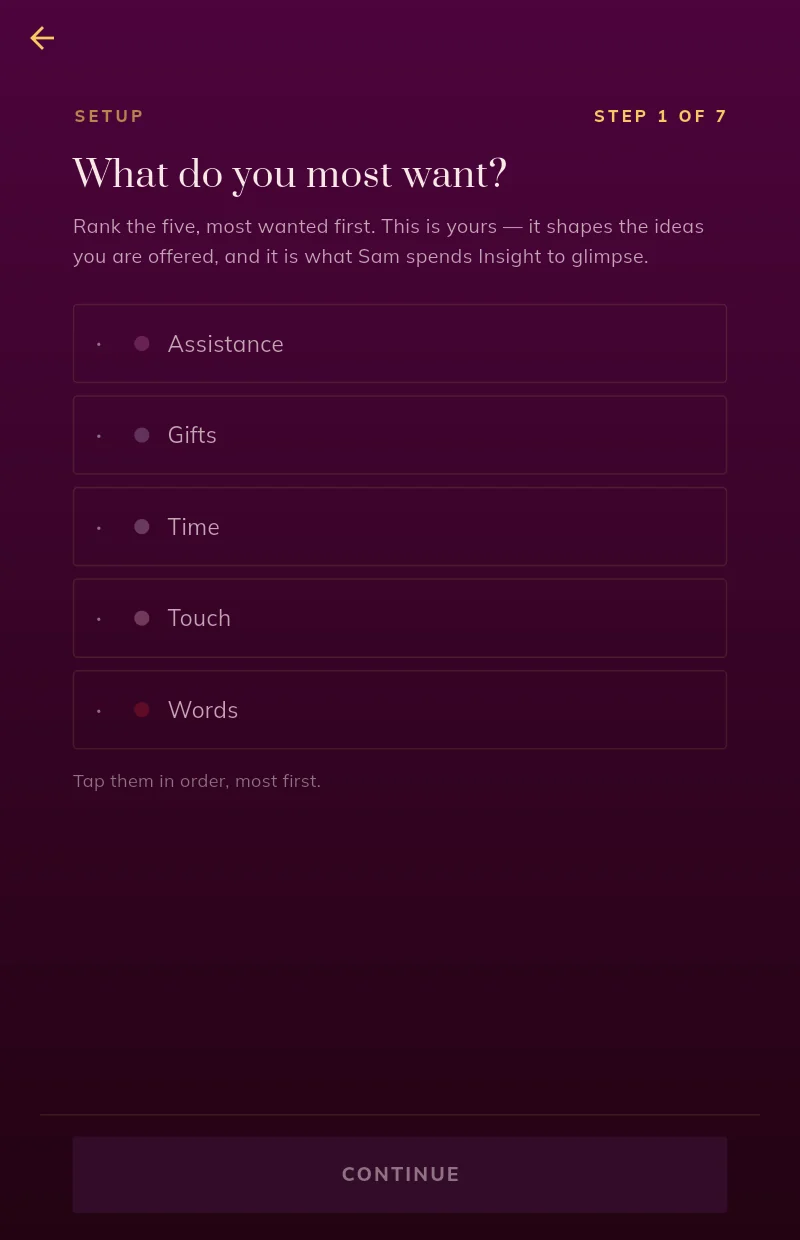
Each day revolves around one of five relationship categories:
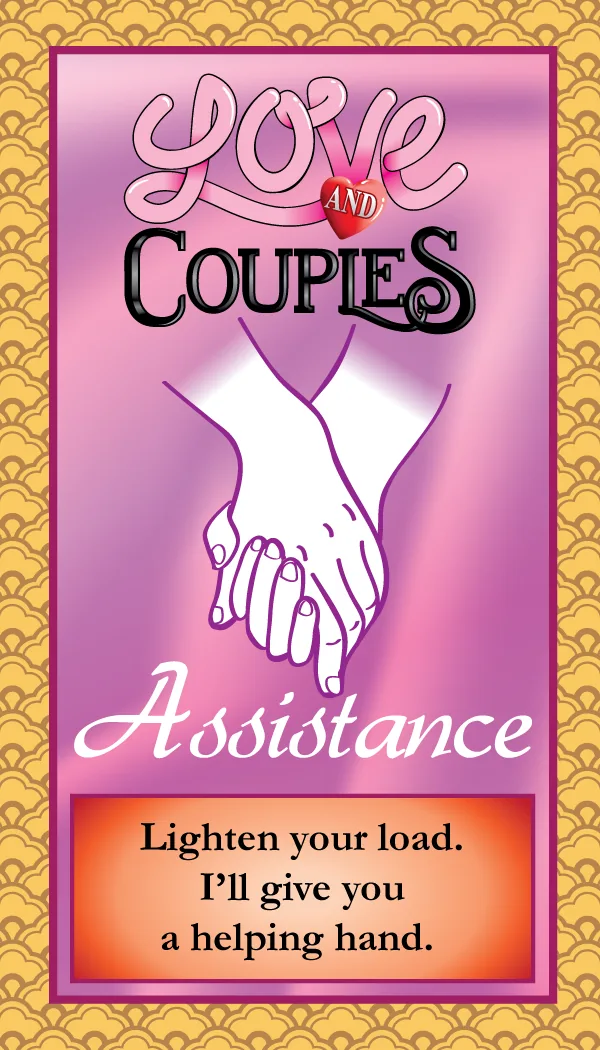
AssistanceHelp, support, and make life easier for your
partner.
GiftsSurprise them with something thoughtful.
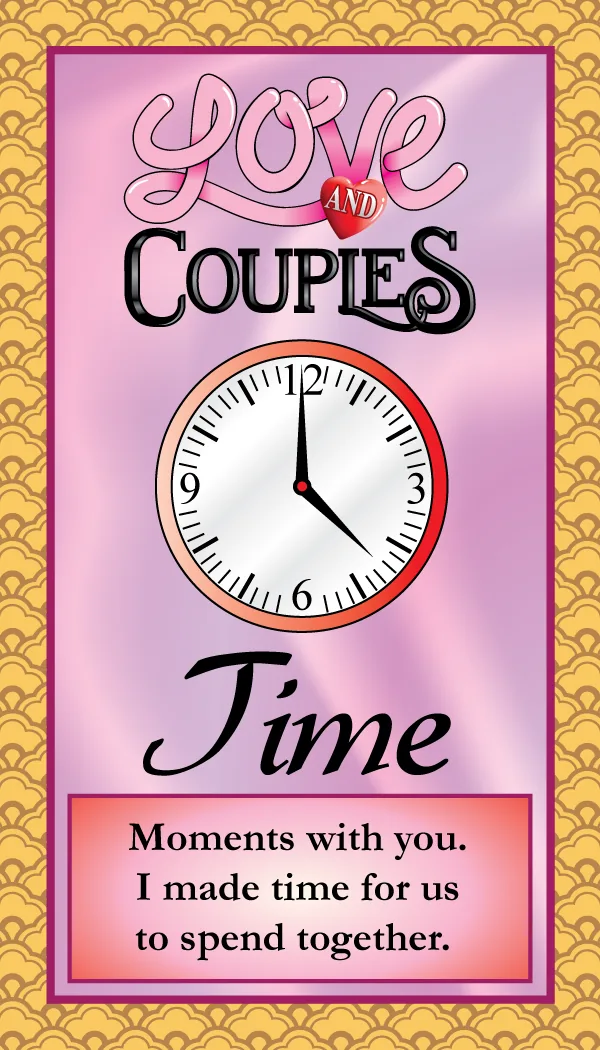
TimeGive them your attention and make time together
count.
TouchBuild closeness and physical connection.
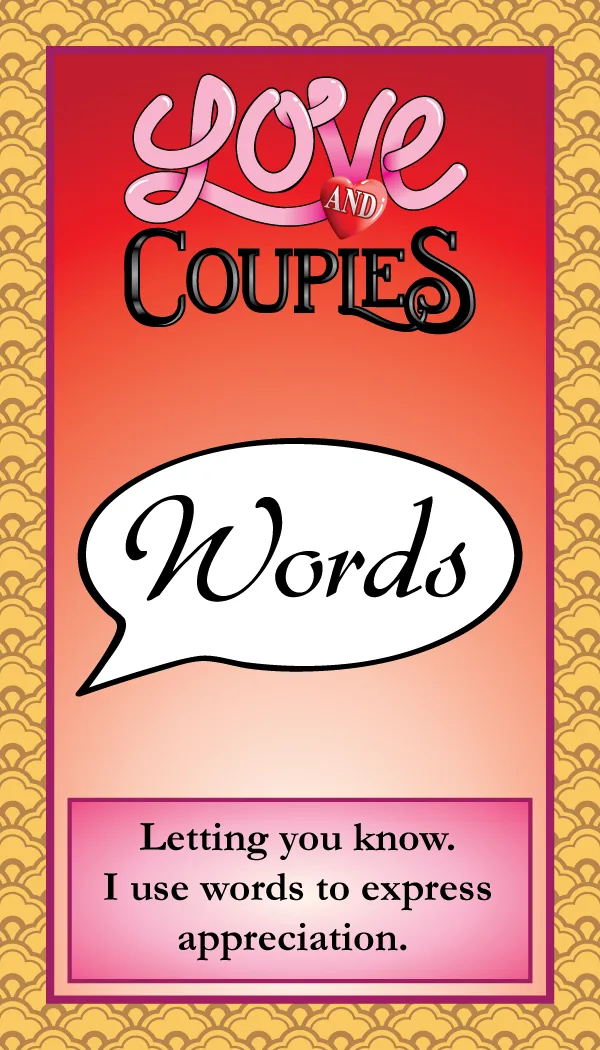
WordsMake them feel appreciated, desired, valued, and
loved.
At the end of each day, partners score each other’s performance from 1–3 points. The better you make your partner feel, the more points you earn.
But there’s a twist…
Real relationships aren’t predictable — and neither is this game. You start with three tokens that can completely change a day’s strategy:
And two more that nobody is given. These have to be won:
And when you’re feeling confident…
Think you crushed the day’s challenge? Double Down. Put the day’s points on the line. Land a three and it becomes six. Land a one and it becomes nothing at all — and your partner takes the lead while you stand still.
Every day becomes a new opportunity to catch up, take the lead, defend your position, or gamble on yourself.
As the days pass, the competition gets tighter. The standing reveals who’s putting in the effort, who’s falling behind, and who is dominating the relationship game.
A season pays sixty-eight points at most — twenty days out of three, the finale out of five, and one Double Down that turns a three into a six. Where you land in that is the season’s verdict on you:
Sixty-five is a whole season played perfectly with the Double Down never spent. So the top band is not simply more points — it is the one you cannot reach without calling that gamble right.
Then comes day 21.
The scores are locked.
The winner is crowned.
And
the partner with the lowest score has one final obligation:
Pay the Prize.
Before the game begins, each partner seals two things: a prize they want if they win, and a penalty they will take if they lose. Neither is readable until day 21 — not by your partner, and not by any screen in this app.
It could be a romantic date.
A special
experience.
A thoughtful gift.
A day planned entirely by their
partner.
Or something a little more adventurous.
The winner chooses. The loser delivers.
Because in Love & Couples, winning isn’t just about points. It’s about discovering how well you really know your partner — and proving that you’re willing to go the extra mile.
Love. Play. Compete. Win.
21 days can change a relationship.
The Reality Game
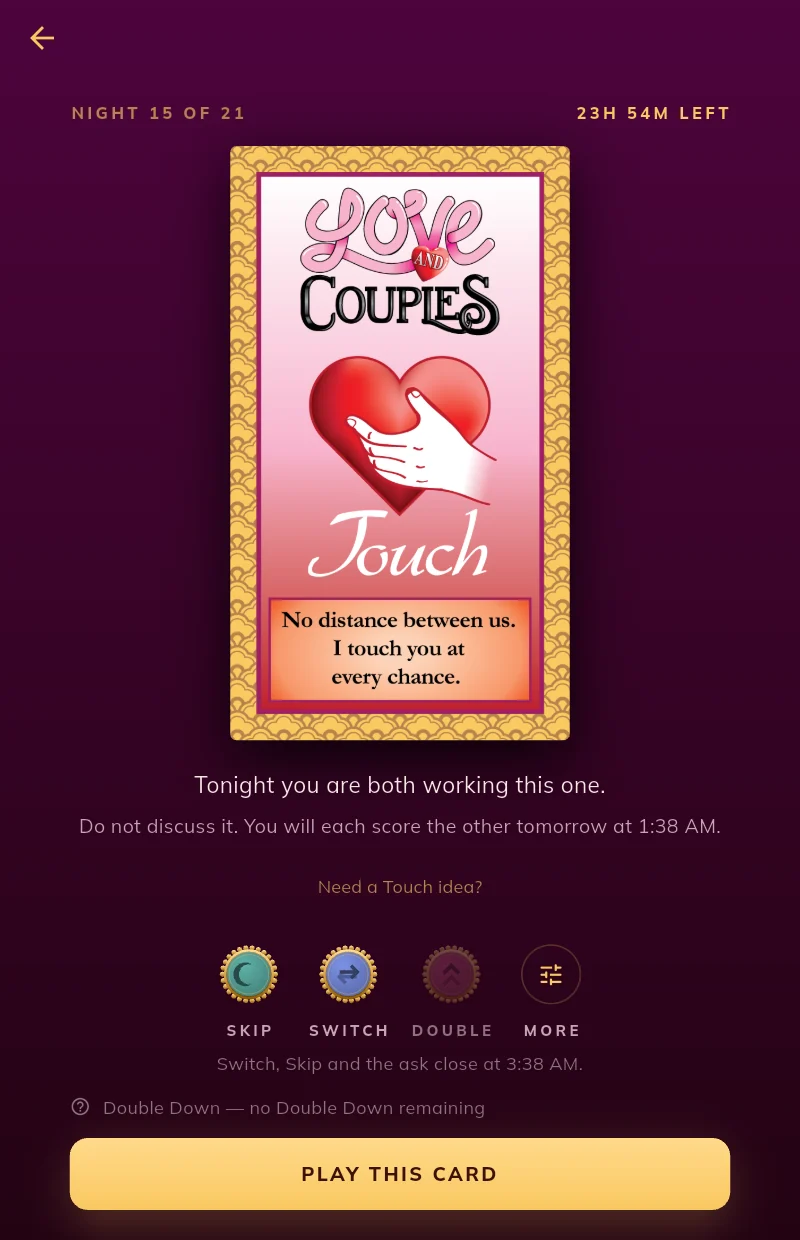
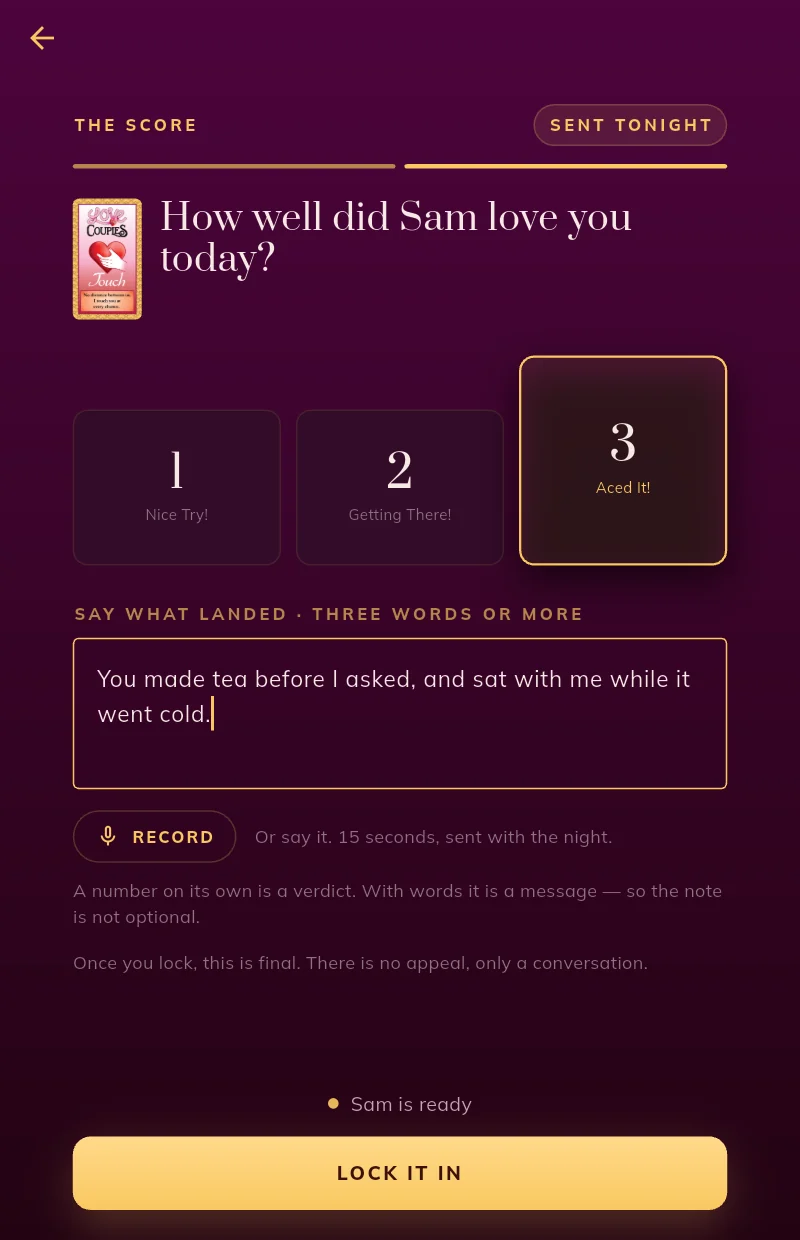
Every day at an hour you choose together, a card turns over. You each do what it asks — without discussing it — and when the day closes you score each other, one to three.
Three weeks later you open the envelopes you sealed before any of it began.
iPhone and Android · First three days free
Opening day
Why twenty-one days
Nobody drifts on purpose. It happens across ordinary weeks where both people meant well, were tired, and assumed the other one knew. Three weeks of this is long enough for that to stop being the pattern.
You have to actually do something.
Not answer a question about your relationship — do a thing, that day, for a person who will tell you how it landed. Twenty-one times. It is very hard to coast through that, and most of what people call drifting is coasting.
You find out what lands, not what you meant.
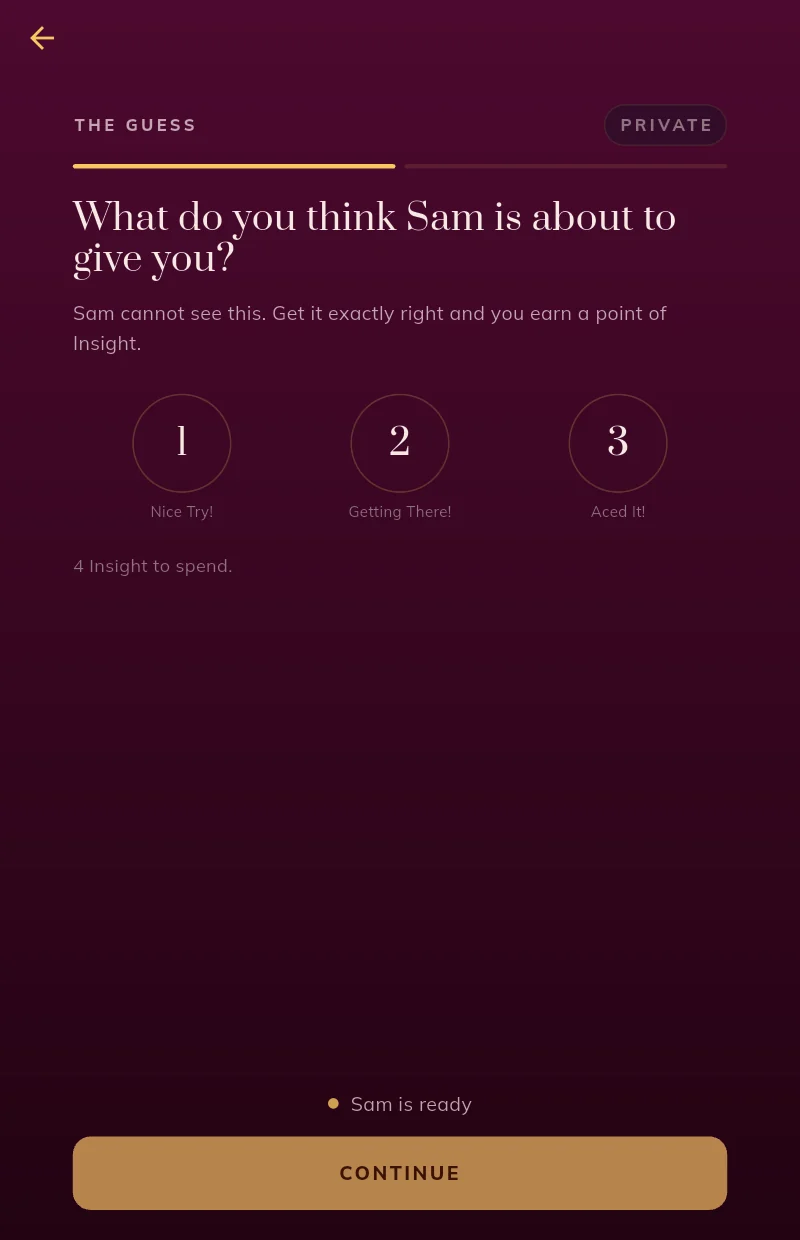
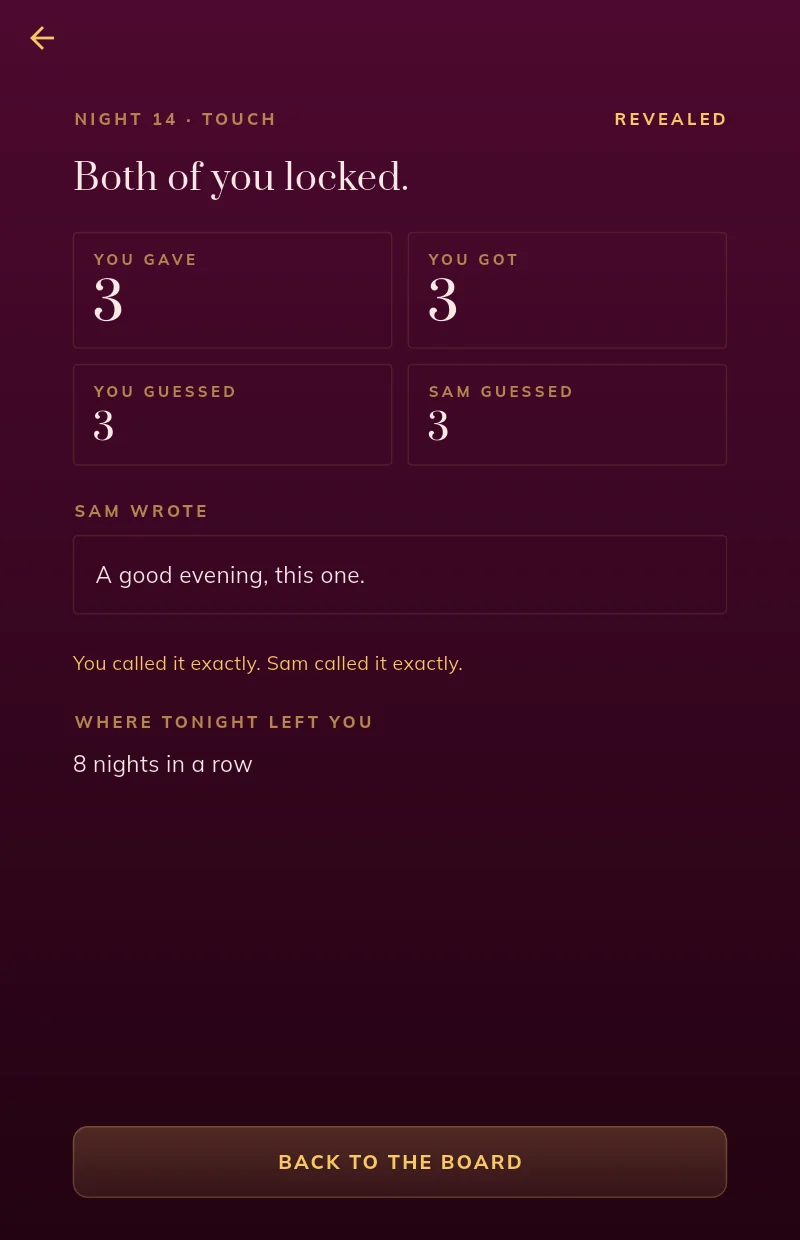
Before you see their score you privately guess it. Day after day, the gap between your guess and their number is the most useful thing in the game: it is the exact distance between what you intended and what they received.
Neither of you can retaliate.
Scores stay sealed until you have both locked, so nobody answers a three with a three. What you write is what you actually thought, because you wrote it not knowing.
And by the third act nobody is allowed to hint any more. Whatever you get right by then, you got right because you were paying attention — which is the whole thing the game is quietly training you to do.
Who plays it
This is not therapy and it is not a repair kit. It is a game, and it is for people who are already fine and would rather not drift.
If you already chose each other, it is for you.
Five suits
You draft the twenty-one days together before the season starts — four of each suit, in whatever order you like. You know what is coming. You do not know what they will make of it.
Stuck for an idea? The app has them. These are real ones.
TimeHours that belong to nobody else.“Put both phones in a drawer and do not take them out until bed.”
TouchThe whole range of it.“Sit close enough that you are touching, for a whole film.”
WordsSaid out loud, or written down.“Tell them one specific thing they did this week that you are still thinking about.”
GiftsRarely the expensive kind.“Something small that proves you were listening weeks ago.”
AssistanceThe thing they have been dreading.“Do the one chore they have been quietly dreading, before they get to it.”
What actually happens
Love & Couples asks you to do one real thing for each other every day for twenty-one days, and then to say honestly how it landed. The app keeps the clock, the score and the secrets. The rest happens away from the phone.
A guided walkthrough
This is the whole loop — about four minutes of your day, most of which happens with the phone face down. Follow along, or tap any step.
Real screens, captured from the app on a device. The names and the numbers belong to a test account.
Why the score is worth anything
So nobody answers a three with a three. You cannot copy it, you cannot retaliate with it, and you cannot quietly adjust yours because you saw theirs first. What you wrote is what you actually thought, because you wrote it not knowing.
And before you see their number you privately guess it. The gap between your guess and their score is the exact distance between what you meant and what they received.
It is a game, not a checklist
Ask for what you want. Nudging your partner toward what you are hoping for is free, and nobody is expected to know anything yet.
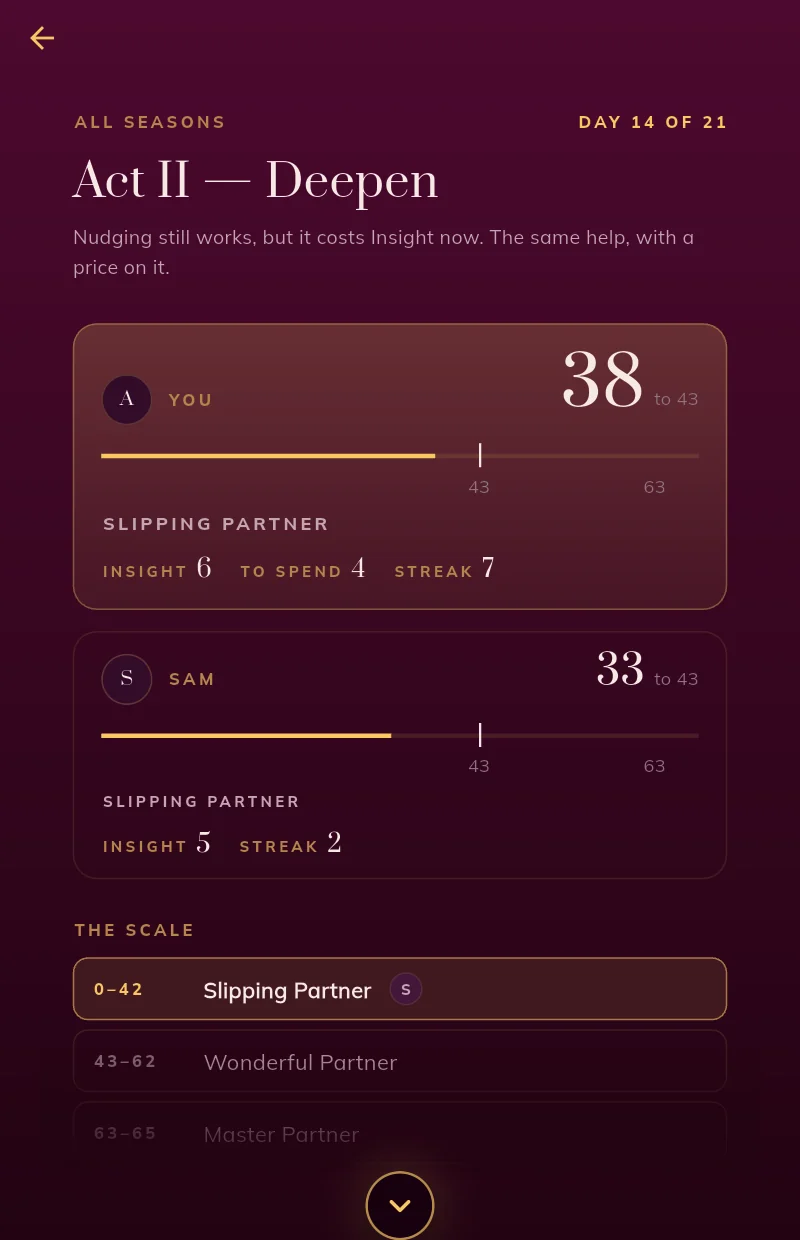
Asking still works, but it costs Insight now. The same help, with a price on it.
Nudging is over. What you know by now is what you have paid attention to.
A season pays sixty-eight points at most, and where you finish in it has a name. Both marks are visible to both of you all the way through.
Sixty-five is a whole season played perfectly with the Double Down never spent, so the top band is not simply more points: it is the one you cannot reach without calling that gamble right.
Five tokens
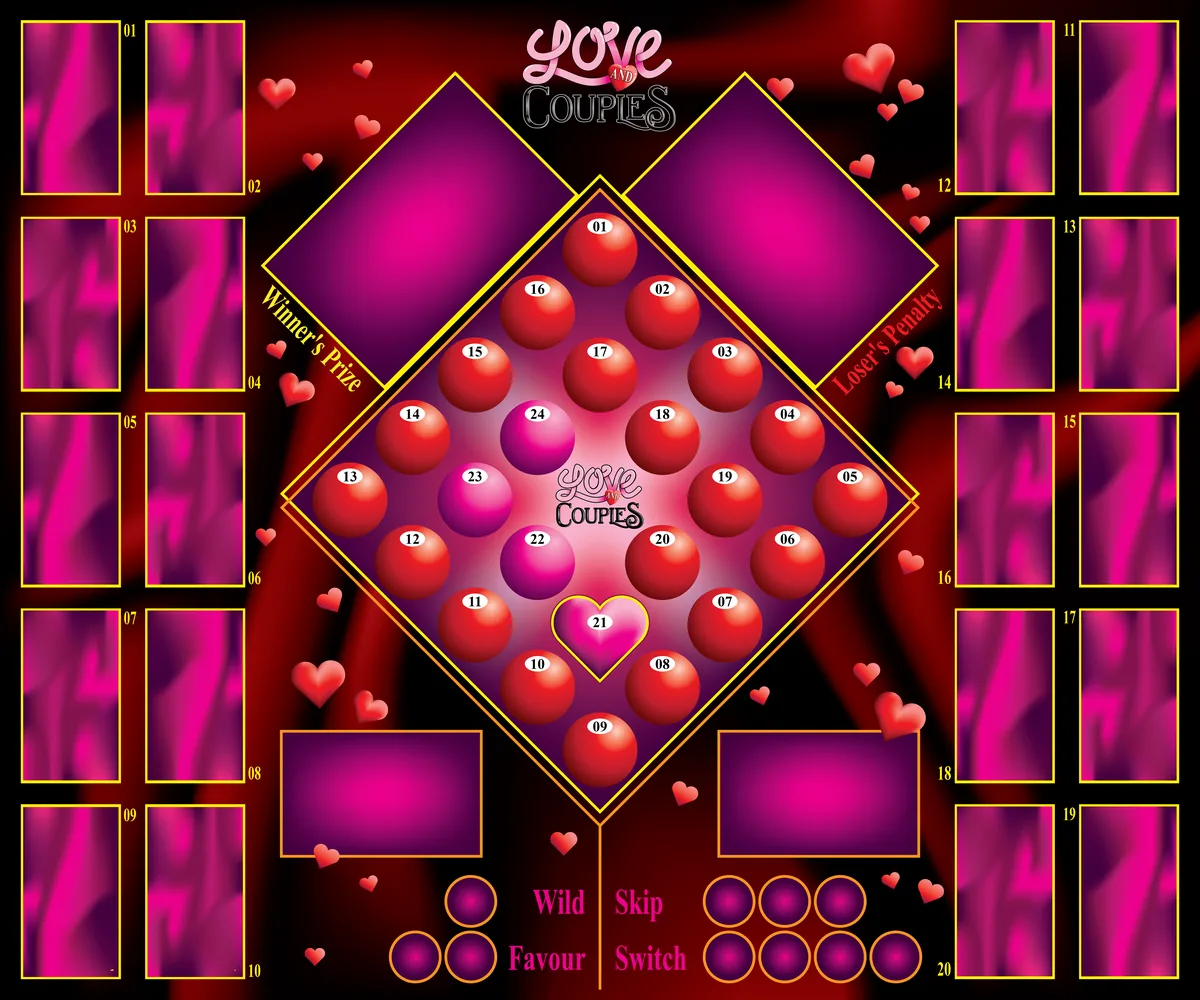
They are pieces on the printed board and they are pieces in the app. Spending one changes what a day is worth — and one of them your partner never even knows you played.
Day twenty-one
The envelopes open.
Before the first card ever turned over, you each sealed three things: a prize, a penalty, and a blind ranking of the five suits in the order you believed your partner wanted them.
None of it is readable until the final day — not by them, not by us. Then it opens, all at once, and you find out how well you actually know the person you have been playing with for three weeks.
The winner names their prize. The loser delivers it. Both were sealed before the first card turned over, and neither of you has seen the other’s.
One condition, and it is the point: a winner who did not clear the line collects nothing. You have to win it, not just win it by more.
The part that matters most
A game that asks two people to be honest about their days has no business doing anything else with what they write.
Your prize, penalty and ranking are locked until day twenty-one. Your partner cannot see them early, and neither can any screen in this app.
Scores stay hidden until you have both locked. It is not possible to see what they gave you and then decide what to give them.
Notes go to your partner, not to us. Your photo is seen by them and nobody else, and its location and camera details are stripped before it is saved.
There is nothing in this app to sell, and nothing about your relationship is for sale either.
Either of you can end a couple, and every season you played together stays in both your records. Deleting your account is one tap in Settings, not an email to support.
You can pause a season, or end one together, and the app will never make either of you feel bad about it. That is a rule it is built on.
Where it came from
Love & Couples was printed, boxed and played on a table long before it was an app — the same twenty-one days, the same five suits, the same tokens you can hold.
The app does the parts a board cannot: it keeps the hour, it keeps the scores apart until you have both committed, and it keeps the envelopes shut. Everything else still happens between the two of you.
Everything that is in it
Twenty-one days is the shape. This is what the app does with them.
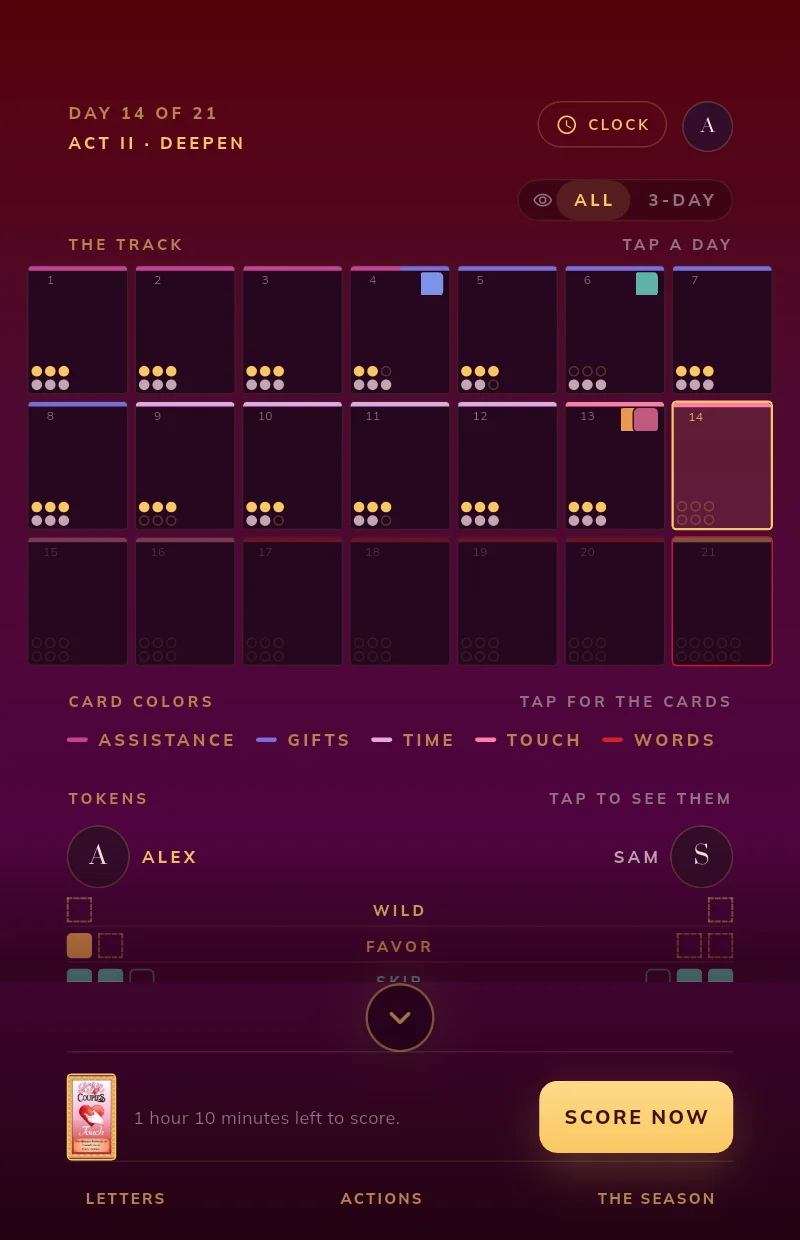
Twenty-one cards across five suits and three acts, drafted before you start. In an open season you draft them together and both know the calendar; in a blind season you each draft your own and learn the other’s suit only when the day resolves. Day twenty-one is the finale, and it is the one day scored one to five.
One, two or three, with a private guess at what they will give you — call it exactly and you earn a point of Insight. Neither score appears until you have both locked. Every score carries a note of at least three words, or fifteen seconds of your voice, sent with the day.
Ten in the box: four Switches, three Skips, two Favours and a Double Down. Skip and Switch unlock on day four, Double Down on day eight. A Switch costs you a point after your partner has judged. The Wild is not given — it is won by fourteen straight days graded a three, and it arrives instead of a second Favour.
A Favour or a Wild becomes a deed: words, a date, and both your names. It stays on the board until it is signed or done, it survives the season that won it, and the app reminds whoever owes it on the day before it falls due.
A private thread under one of the five suits, for saying the thing itself rather than talking about the game. Letters are kept for three weeks, and each of you may keep one out of that, forever.
Forty-three points clears the season and sixty-three makes you a Master Partner, out of a possible sixty-eight. Both marks are visible to both of you all the way through, alongside your Insight, your streak and every day you have played. A Read on what they most want costs three Insight.
A day stays open for two hours after it closes, and a Skip covers a missed one automatically. Either of you can ask for a pause; it takes effect when you both have. Stopping is not a failure state and the app never says it is.
Reminders when a day opens, when it is closing, and when the reveal is ready — and none of them ever carries a score. It captures offline and sends the lock when you are back. It runs on phones and on tablets, at any text size the system offers.
Delete your account from inside the app. It stops working immediately, you are told by email what happens next and how long you have to change your mind, and then it is gone. No export, no retention, nothing kept back.
What it costs
After the free days
$21.99 for one season
One payment. It does not renew, and there is nothing to cancel.
Not a subscription. Twenty-one days for the price of one dinner out.
Download it, pair with your partner, draft your season together, and pick the hour your card turns over.
Free for the first three days. Nothing to pay to look around.
Before you ask
Yes. It is a game for two, and both of you score, seal envelopes and draft the season. One of you creates the couple and shares a code; the other joins with it.
A day stays open for two hours after it closes. Miss it entirely and a Skip covers it automatically — you have three. Run out and the season ends early, which the app tells you both plainly and without blaming anybody.
Yes, for up to three days, once per season, and it takes both of you agreeing. Ending a season early takes both of you too. Neither is treated as a failure.
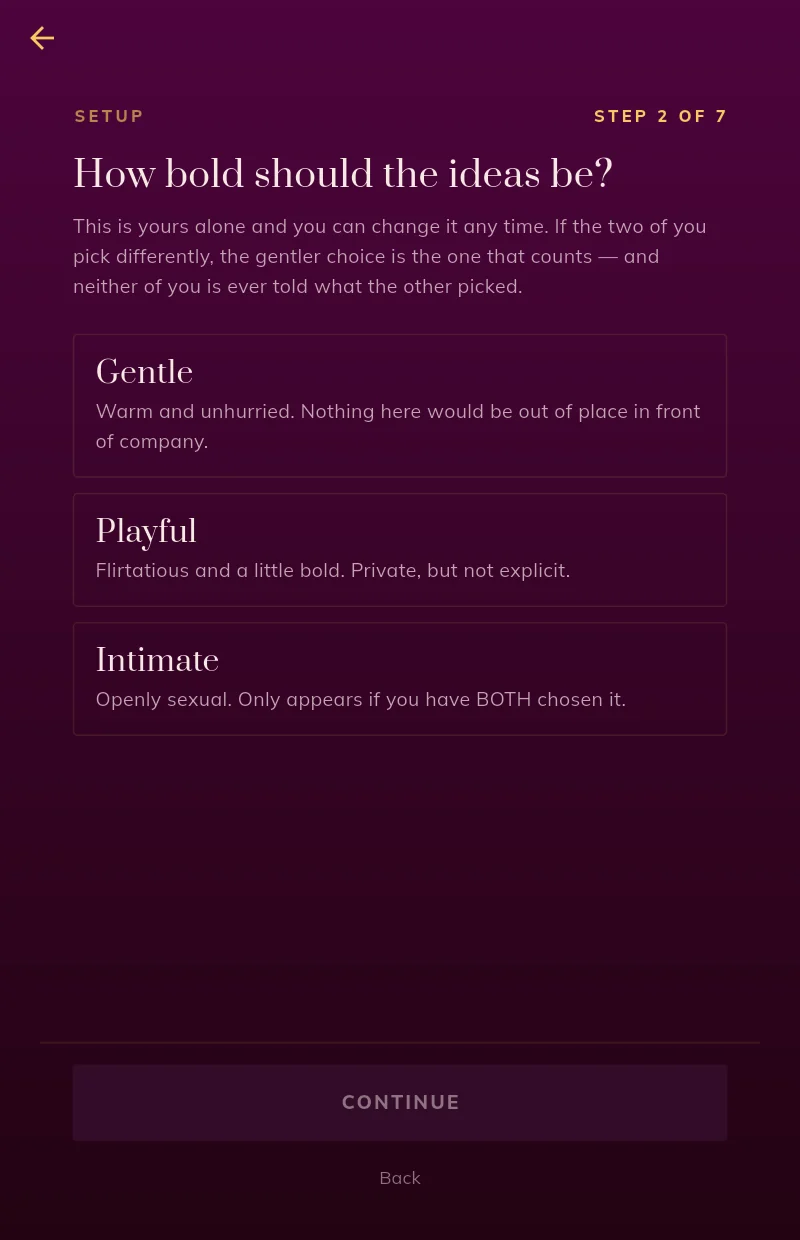
No. Touch is one of five suits and covers its whole range, but the cards ask for effort and attention rather than anything graphic. It is a game about paying attention to someone, not a novelty deck.
The envelopes open, you find out where you both finished, and the whole season stays in your records — every score, every note, every card. When you want another one, you draft it fresh: new calendar, new envelopes, and you can switch between the open and blind versions of the game.
In an open season you draft the twenty-one days together and both know the calendar. In a blind season you each draft your own, and you do not learn which suit your partner was playing until the day resolves.
Yes. You can leave a couple between seasons and pair with somebody new, and every season you played before stays in your record — with the name of who you played it with.